Lacawac is now accepting applications for the 2025 R.E. Moeller Research Award
Applicants can be graduate students, post docs, or faculty. Preference will be given to scholars who are new Lacawac users or are starting new projects, and who request funding to cover Lacawac lodging, lab, and/or boat fees. Awards are up to $5,000 but are generally ~$2,500.
2024 R. E. Moeller Fellows

David Velinsky, Professor, Biodiversity, Earth and Environmental Science, Drexel University
Impact of Freshwater Mussels on the Food Web Structure of Lake Lacawac: Use of Stable Isotope Systematics
Dr. Velinsky obtained a BS Degree from the Florida Institute of Technology in Oceanography with a minor in Chemistry and was awarded his PhD degree from Old Dominion University in Chemical Oceanography. Dr Velinsky has been studying the movement and cycling of carbon, nitrogen, and phosphorus in estuarine and freshwater environments in the mid-Atlantic region and uses methods of stable isotope biogeochemistry to understand environmental change over time with modern and historic samples. A focus of his work are aspects of water quality and wetland ecosystem services relative to climate impacts in the Delaware and Barnegat Bays. He is a member of the Advisory Committee on Climate Change and the Toxics Advisory Committee at the Delaware River Basin Commission and a member of the Science Advisory Board for the State of New Jersey.
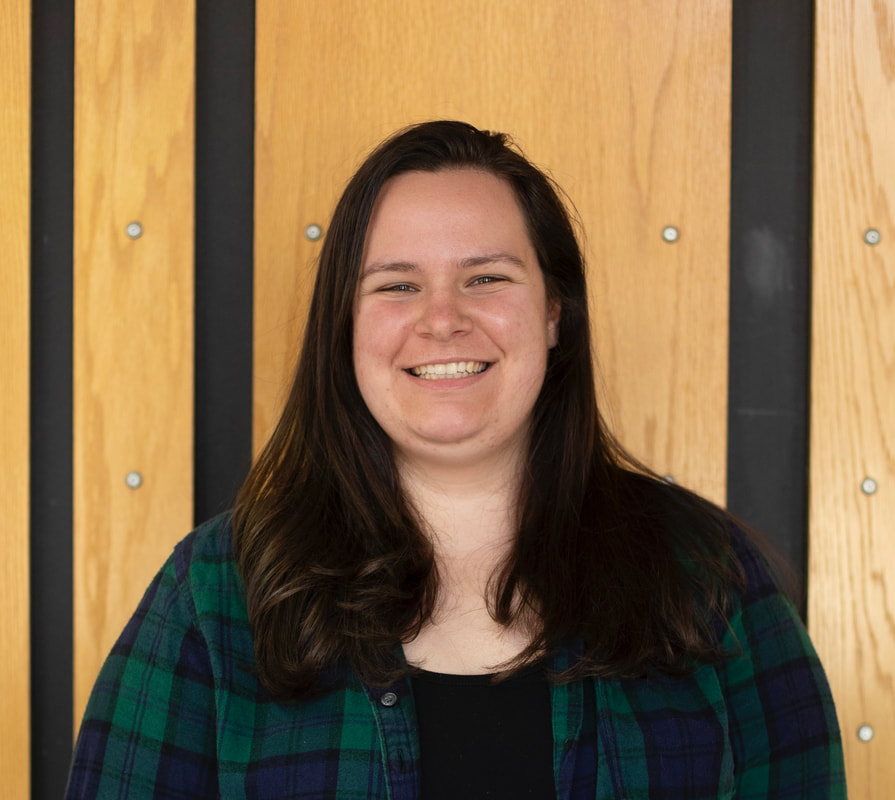
Alexandra Bros, Pocono Lake Ecological Observatory Network
Regular Monitoring of a Highly Recreational Northeastern PA Lake Shows Low, Yet Persistent Toxicity in the Presence of Harmful Algal Bloom Visual Cues
With three field seasons on lakes in the Pocono Mountains through PLEON, Alex has expertise in Pocono lake limnology, community science program maintenance and execution, and water quality monitoring in PLEON freshwater lakes. She is interested in lake dynamics, harmful algal blooms, eutrophication, and human impacts on freshwater systems.
Robert Moeller, a friend to Lacawac…

Robert was born in Chicago in 1949 and grew up roaming the hills and fields of western Pennsylvania. He went to high school at Shadyside Academy in Fox Chapel PA and did his undergraduate work at Dartmouth College. He earned his PhD from Cornell University in Aquatic Ecology, followed by postdoctoral work in Paleolimnology at the University of Minnesota and in Aquatic Ecology at Michigan State. His career involved positions at the Academy of Natural Sciences in Philadelphia, Lehigh University, and most recently Miami University in Oxford, Ohio. Many years of his life were dedicated to work on Lake Lacawac and other lakes in the Poconos of northeastern Pennsylvania.
From his earliest childhood Robert spent each day in active pursuit of knowledge. His unquenchable and wide ranging curiosity about matters from reptiles and bugs to fossils and rocketry as a child, through nature, history, music, culture, politics, literature, languages, and geography made asking him a question its own reward. It is the intention of the Robert Estabrook Moeller Memorial Fund to support promising young scholars in limnology with bright, inquisitive minds who will perpetuate this search for knowledge.
Robert’s generosity extended to his establishing an endowed fund which will support Robert Estabrook Moeller Research Fellow awards to college and university students and faculty to do limnological research on Lake Lacawac and other Pocono region lakes.
Previous Recipients
2022/23
Dr. Sarah Princiotta
Biological Drivers of Cyanobacteria Blooms
2021
April Howden, Liverpool John Moores University
Understanding the retreat of the North American Ice Sheet
Addie Zeisler, Miami University of Ohio
UV or Not UV: Behavioral responses of pumpkinseed sunfish to UV radiation
2020
Roger Thomas, Academy of Natural Sciences of Drexel University
Freshwater Mussel Survey of Shallow-water Habitats within Lake Lacawac
Dr. Jessica Moon, Murray State University
Assessing Watershed Health in Response to Deer Browsing and Recovery from Acid Rain in a Hardwood Forest, Northeastern Pennsylvania
2019
Dr. Jessica Moon, Murray State University
Long-term deer herbivory effect carbon pools and fluxes in a temperate forest.
Lauren Adkins Knose, Miami University of Ohio
Investigating algal responses, including community assembly and toxin presence, to changes in nutrient, light and temperature difference, accelerated by increasing dissolved organic matter (DOM).
2018
Dr. Alyson Thibodeau, Dickinson College
Investigation of Lead Isotopes as Chronostratigraphic Markers for Lake Sediments in Northeastern Pennsylvania
Dr. James R. Dearworth, Jr. , Lafayette College
Ecophysiological Evidence for the Ability of red-eared slider Turtles to Adapt to Hypoxic Environments
2017
Dr. Elise Heiss, King’s College
Nitorgen Cycling in Lake Lacawac: Investigating Environmental Controls on Water Column Nitrification
Rachel Pilla, Miami University in Ohio
Mapping the Metabolic Landscape for Threatened Zooplankton Taxa in Lakes
2016
Dr. Christopher Dempsey, Gannon University
The role of photochemical reactions and microbial degradation in the oxidation of dissolved organic carbon in Lake Lacawac
2015
Jennifer Brentrup, Miami University of Ohio
A comparison of the fate of terrestrial dissolved organic matter in temperate vs. sub-tropical lakes
2014
Dr. Robyn Smyth, Bard Center for Environmental Policy
Understanding changes in lake thermal structure: preliminary physical analysis of Lakes Lacawac and Giles